Growth · 4 min
Creator traffic sources compared: intent, ownership and AI visibility
In one minute
Creator traffic sources come in four kinds, from people already looking for you to people you pay to reach. What each is good for, how much of it you own, and why some now matter for AI answers too.
You will learn
- The short answer
- Four kinds of traffic
- The safe-for-work channels
- Traffic sources and AI answers
- Choosing your next source
- Tracking every source
- Why paid ads rarely work
- Paid shoutouts and disclosure
- Seasonal patterns
- An illustrative month
- Spreading the risk
- Traffic from AI answers
- Quality over volume
- Choosing what to test next
- Traffic and your privacy
- A quarterly traffic review
- Directories and listing sites
- Notes for agencies
- In short
- References
Updated by the FanGrowthLab team
The short answer
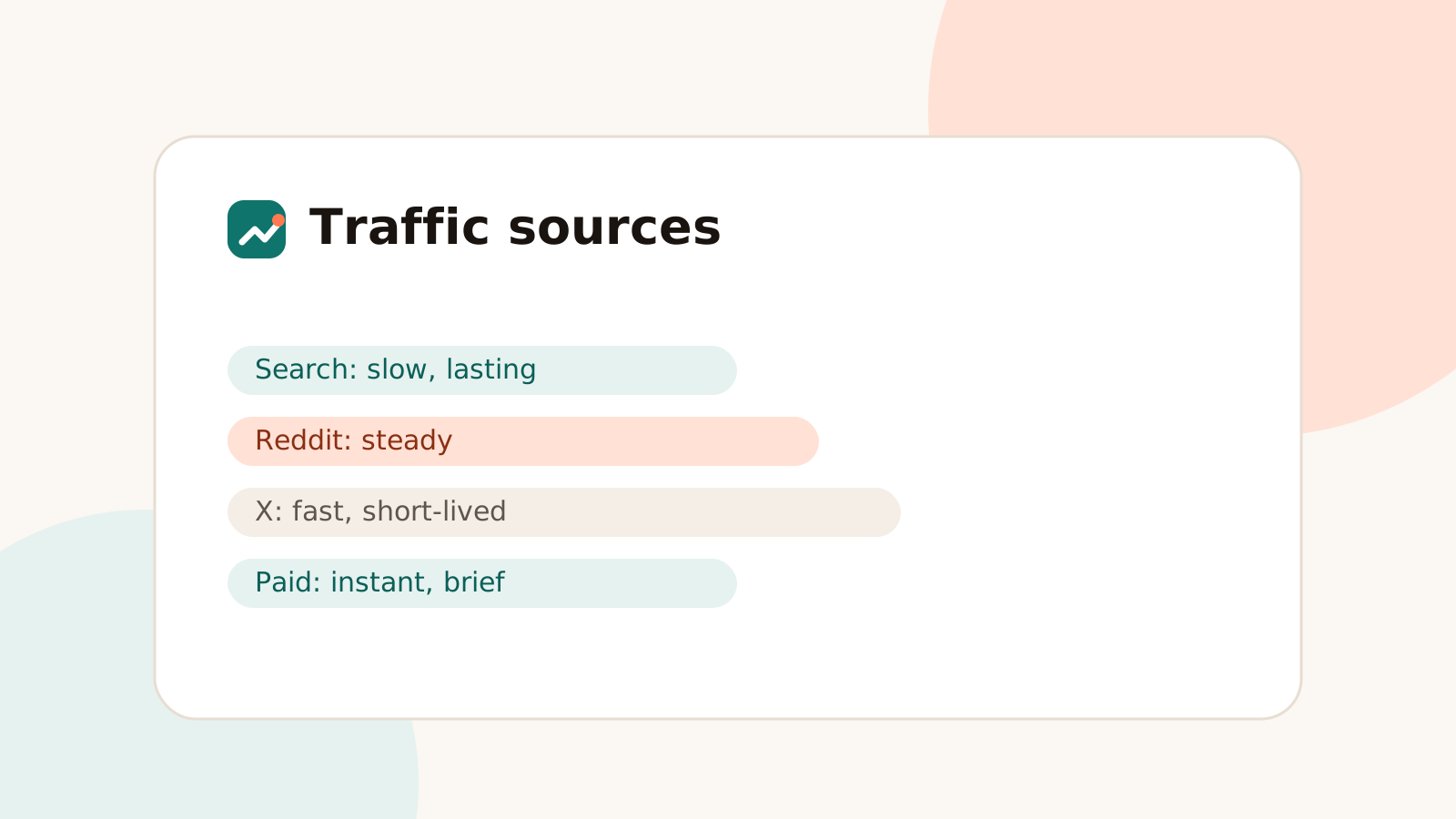
Creator traffic comes in four kinds: people already looking for you, people browsing a feed, people borrowed from another creator's audience, and people you pay to reach. The first kind converts best and lasts longest, but you have to build it. The last kind is instant and disappears when the money stops. A healthy mix leans toward the traffic you own.
Four kinds of traffic
| Kind | Examples | Intent | How much you own |
|---|---|---|---|
| Looking for you | Searches for your creator name, your own site, bookmarks | High: they already chose you | Most of it |
| Browsing | Reddit communities, X timelines, the Fansly feed | Medium: curious, comparing | Your profile, not the reach |
| Borrowed | Collaborations, shoutouts from other creators | Medium to high, if the audiences match | Only the fans who follow you afterwards |
| Paid | Paid promotion from bigger accounts, adult ad networks | Low to medium | None, once the spend stops |
The right mix changes with your stage. A new creator borrows and browses to get started. An established creator should be moving steadily toward the first row, because that is the traffic that survives a platform changing its rules.
The safe-for-work channels
Instagram and TikTok have huge audiences and strict rules. Both prohibit explicit content and sexual solicitation, and guides that summarize Meta's rules describe links to adult subscription sites being age-restricted and suggestive posts being shown less to non-followers. Creators who use them treat them as a place to build a name with fully safe-for-work content, and expect links and reach to be limited.
Used that way, they can help people remember your creator name, which then shows up as search traffic. Used as a direct sales channel, they tend to cost accounts.
Traffic sources and AI answers
A newer reason to think about sources: AI assistants now answer questions about creators and platforms, and they draw on pages they can read. One 2026 industry analysis names Reddit as the most-cited domain across AI answer engines, which makes a genuine, long-running Reddit presence useful beyond the traffic it sends.
The same logic applies to your own site. A clear, factual about page is something both search engines and AI tools can quote. Finder sites and copies are what they fall back on when you give them nothing better, which is why branded search and your own website belong in any traffic plan.
Choosing your next source
Ask three questions before adding a channel. Do you have the hours to post there properly every week? Does the platform allow what you need to post, without workarounds? And will anything you build there still be yours in a year? A channel that scores badly on the third question can still be worth using, as long as it points fans to something that scores well.
Give each source its own tracking link and compare them by paying subscribers after a month, not by clicks. The setup is described in subscriber growth, and the weekly routine for organic sources in organic subscriber acquisition.
Tracking every source
| Source | How to track it |
|---|---|
| X and Reddit posts | A separate tracking link per channel |
| Your own site | A link used only on the site |
| Search for your name | Search Console queries and site visits |
| Shoutouts and collaborations | A link per partner |
| Email list | A link per email |
Why paid ads rarely work
Google and Meta do not allow ads for adult content, and most mainstream ad networks follow similar rules. Adult ad networks exist, but they often bring low-quality traffic and fans who leave quickly. For most creators, owned and organic channels bring better subscribers for less money.
Paid shoutouts and disclosure
Paying another creator for a shoutout is common. In the US, the FTC expects paid promotions to be disclosed clearly, so ask partners to label them. Track each shoutout with its own link and judge it on renewals as well as sign-ups.
Seasonal patterns
Traffic often rises around holidays and weekends and dips at other times. Plan bigger promotions for busy periods, and use quiet weeks for site updates and takedowns.
An illustrative month
Hypothetically, a creator's month shows 120 new subscribers: 50 from X, 30 from Reddit, 25 from name searches and her site, and 15 from a shoutout. After a month, renewals are highest among search and site visitors and lowest from the shoutout. Next month she cuts the shoutout budget and spends the time on her site and Reddit.
Spreading the risk
Relying on one source is risky; a policy change can cut it overnight. Aim for at least three sources that each bring fans, with your own site and name searches as the steady base. Owning that base is covered in the creator-owned website, and the service on subscriber growth.
Traffic from AI answers
Some fans now find creators through AI assistants. Those tools tend to recommend creators with clear, public, safe-for-work information and a consistent name across platforms. A creator-owned site and accurate profiles make it more likely you are described correctly.
Quality over volume
A source that brings many sign-ups who leave after a month costs time and can hurt the account's standing. Judge every source on renewals and revenue per fan, not on raw numbers. A smaller stream of fans who stay is worth more than a flood of free trials.
Choosing what to test next
Test one new source at a time for a month, with its own link, while keeping the others steady. Compare renewals, as well as sign-ups. Keep what works and drop what does not.
Traffic and your privacy
Every channel that brings fans also brings attention from people who are not fans. Keep work accounts separate from personal ones, use a work email and phone, and remove location details from every image before posting. More traffic should never mean more exposure.
A quarterly traffic review
Every three months, list each source, the subscribers it brought and how many renewed, and the time it took. Keep the best two or three, improve the middle ones and drop the rest. The review takes an hour and usually changes more than any new tactic.
Directories and listing sites
Some sites list creators and send traffic for a fee or for free. Check their reputation, avoid any that copy content or request personal details, and track each with its own link. Many bring very little; a few are worth keeping for the long run.
Notes for agencies
Agencies managing several creators should track sources per creator, never pool links, and share each creator's numbers with them monthly.
In short
Track each source separately, judge it on renewals rather than sign-ups, keep your own site and name searches as the base, avoid paid shortcuts that bring the wrong fans, and review the whole mix every quarter, keeping notes on what changed and why it changed.
References
Follow the links for the original material, and check dates, since guidance is revised from time to time.
Creators also ask
Which traffic source converts best?
Usually the people already searching for you by name, because they have decided before they arrive. Measure it yourself with one tracking link per source; your niche may differ.
Can I advertise my OnlyFans on Google or Meta?
Mainstream ad platforms heavily restrict ads that promote adult content, so paid growth usually means buying promotion from other creators or adult ad networks, each with its own rules.
Should I use Instagram and TikTok at all?
Only with fully safe-for-work content, and with the expectation that links and reach will be limited. They can build a name; they rarely send many paying fans directly.